
Daring voices: Anna and Paul Moynihan
Welcome to Daring Voices, our series spotlighting the founders in the Daring Capital community. In each edition, we sit down with a founder to hear their journey in their own words: from their origin story, to the challenges they’ve faced, and the lessons they’ve learned along the way.
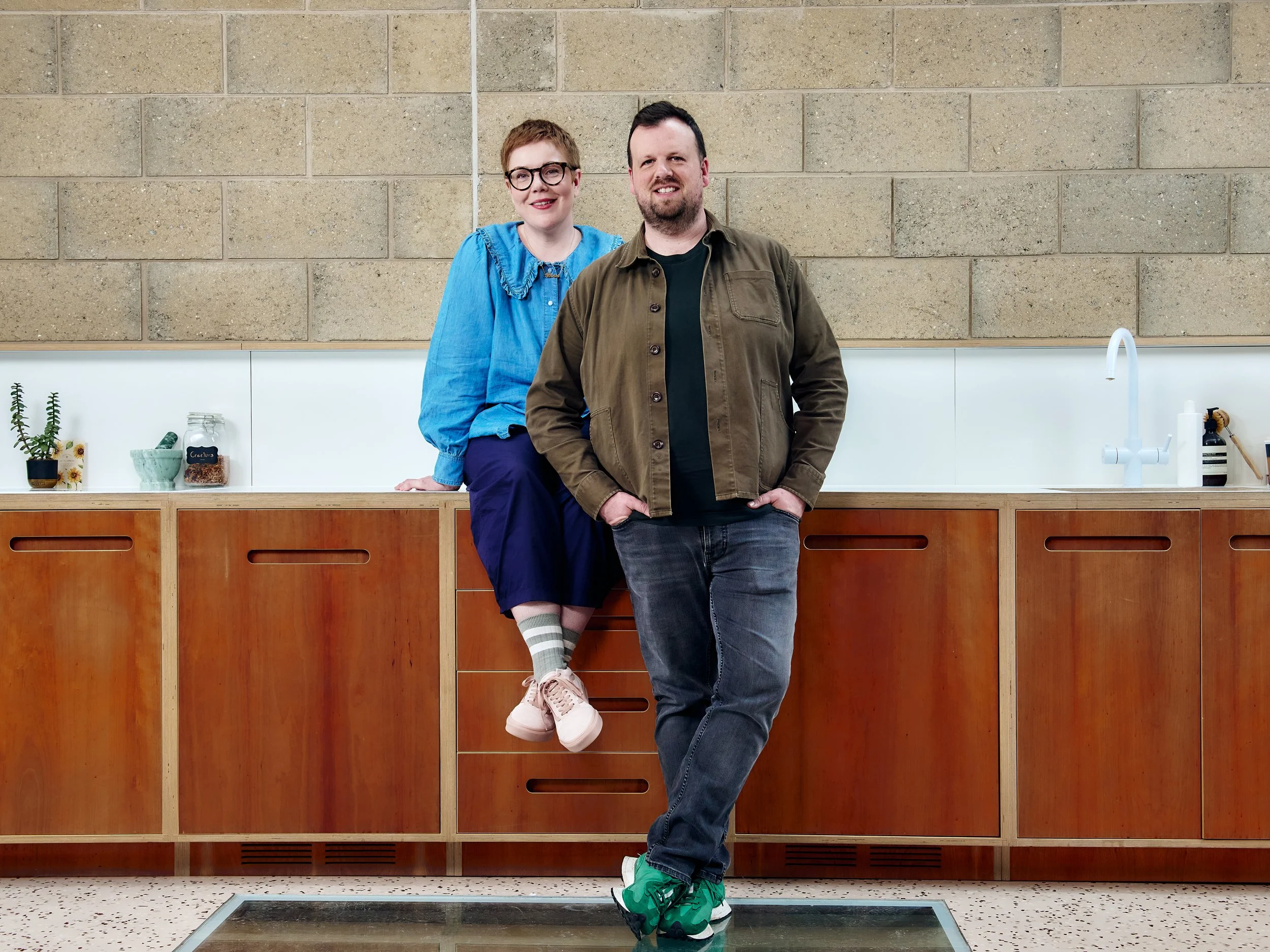
This week, we talk to Anna and Paul Moynihan, founders of TaskHer.
What experiences led you to think something had to change - for tradeswomen specifically?
The idea for TaskHer was sparked from personal experience initially, wanting to find a female kitchen fitter and realising there was absolutely zero representation for women in the trades when I went to look for one. The further we dug into the problem, the more we realised that the issue is impacting women on a much wider scale and this multi-billion-pound industry had virtually no women representing it.
I remember uncovering stats that showed women missing out on nearly £1M lifetime earnings simply because female school leavers are filtered into lower paid jobs like hairdressing and childcare if they aren't going on to university, whereas their male peers are filtered into the much higher paid skilled trades. That was a bit of a tipping point.
You both got made redundant during COVID. Most people would be looking for security. What made you think, let's build a business?
Firstly, to be transparent, we were both made redundant with decent packages meaning we had the luxury of not having to immediately find work in a fairly chaotic climate. We also had a 3-month-old, I was on maternity leave, and so our focus shifted to making things work so we could be with her as much as possible. Paul had always been entrepreneurial, but I'd always worked for other people and being made redundant whilst on maternity leave during a pandemic nobody could have predicted makes you realise that job security is a bit of a myth - so you might as well give your ideas a go if you have the opportunity!
What was the conversation like when you first floated the idea of TaskHer? Did you both get it immediately?
I will take credit for having the initial idea, but I'm not sure I would have gone with it without the buy-in from Paul - he brings the optimistic, entrepreneurial "what's the worst that could happen" energy! I casually mentioned it to him one evening when I'd done a bit of desk research to see if anything like TaskHer already existed, and I remember he came back a couple of hours later saying "I think we might have something here, we should give this a go" and it quickly snowballed from there.
You've mentioned that women in trades often undervalue themselves. What does that look like in practice - is it about rates, marketing, or is it something deeper?
Our experience is that it's probably all three. We have a UK wide community of tradeswomen that's really active and full of women sharing advice, offering support and asking for help. There are a lot of threads around what rates they should be charging for work they get that's not through TaskHer - with the onus being on what's fair for the customer based on how they value their skillset. Tradeswomen who have more years under their belt tend to know their worth more, but ultimately if you spend your days on a commercial site being told you're not as strong/skilled/able as your male colleagues it's going to get to you at some point.
What's the worst story you've heard from one of your tradeswomen about being underpaid or overlooked?
Oh, there are SO many. Almost every single tradeswoman we've spoken to has a story which is crazy. The worst situation I've heard, aside from your classic misogyny, is tradeswomen literally not having a toilet on site, as the women's facilities are often used as storage. It's such a basic right at work. If I went to an office and there wasn't a toilet I could use, there would be absolute uproar but for some reason building sites are a law unto themselves.
Tell us about the first tradeswoman you signed up. What was her story?
The first tradeswoman we signed up to TaskHer was a heating and gas engineer. When she was training she had gained the hands-on, practical experience that she needed to pass her heating and gas course, but soon experienced discrimination. The company she'd been getting work experience with said they wouldn't be able to work with her because "she'd never be able to lift a boiler onto a wall". She went on to be a sole trader and built her company as well as working with TaskHer…and lifted many a boiler on to, and off of walls!
Can you tell us about someone whose life is materially different because of TaskHer?
When we benchmarked what TaskHer tradeswomen earn through TaskHer, their hourly earnings were 213% more vs women in their local London borough.
Have you met any resistance to the idea? If so, how do you respond to it?
On the whole no, although we've had our fair share of "This is sexist! What if I started a men only trades company?" on social media.
We normally deal with it by pointing out that literally every single trades company until recent times has been men only and that normally shuts them up.
How does TaskHer stand out from existing alternatives - including the AI triage feature?
TaskHer stands out because we aren't just a directory; we are building a platform for an industry that has historically ignored how people actually feel when a stranger enters their home as well as women who want to work in it. While the big players compete on price and volume, we focus on our mission and service standards, powered by a proprietary supply of verified tradeswomen. Our AI is our secret weapon for operational efficiency. It acts as a diagnostic layer, identifying faults and urgency before a tradeswoman even picks up her tools, meaning we get as much information from the customer to the tradeswomen in as few steps as possible.
What has been your biggest challenge so far, and how did you get through it?
Obviously there have been absolutely loads of challenges - but our initial challenge of simply having no experience, weight or reputation in skilled trades was a huge one. To overcome it at the start we built a panel of tradeswomen who we used as a sounding board for everything from product updates to what we should be charging and that board grew to become the tradeswoman community we have today, with hundreds of tradeswomen UK wide.
Have you ever had to choose between your mission and making a profit?
Our mission is so firmly baked into the bones of what we do that it's actually hard to do one without the other! If we are making a profit it means that we are pushing our mission and supporting women in trade. TaskHer is free for tradeswomen to use to receive confirmed bookings and is built on integrity, and will remain that way. We've definitely refused investment because we didn't feel the investor was right for our mission though.
You started a company together and now work together every day with two young children at home. What's that like?
We met at work and our skill sets are really complementary. We work in a very similar dynamic to how we worked when we weren't together so that side of things has always felt really comfortable.
That being said, we spend a LOT of time sitting next to each other at work, sitting on the sofa in the evenings, and lying in bed at night - so there are plenty of times where we'd rather see literally anyone else.
What does success look like to you - beyond the financials?
We've recently started working with women's refuges, supplying tradeswomen for maintenance within the domestic spaces where survivors of domestic abuse are living. During a recent chat with one of the refuge's team I was unexpectedly brought to tears by what they fed back. I'd not really considered the real impact having the option to choose tradeswomen to come into these protected spaces had had on the comfort of those living there. That's what success looks like.
In 20 years, will we still need TaskHer? Or will the industry have changed enough that it isn't necessary anymore?
We are working toward a world where TaskHer isn't needed to fix a stereotype, but where we are indispensable because we've redefined what a good service actually looks like. If TaskHer becomes just another way to book a great tradesperson because the gender barrier has vanished, that's a win. We suspect people will always choose the platform that was brave enough to put their experience first from day one.
What advice would you give to other underrepresented founders starting their fundraising journey?
Being underrepresented is the secret sauce and you can use it to your advantage. You have the insight advantage - underrepresented founders can spot gaps in markets that 'traditional' founders simply won't see. Also, representation is recruitment, so by being visible you're creating the blueprint for the next founder who looks like you.
If you’d like to find out more about TaskHer, you can visit their website.
A big thank you to Anna and Paul for sharing their journey.
Jem
and the team atDaring Capital
